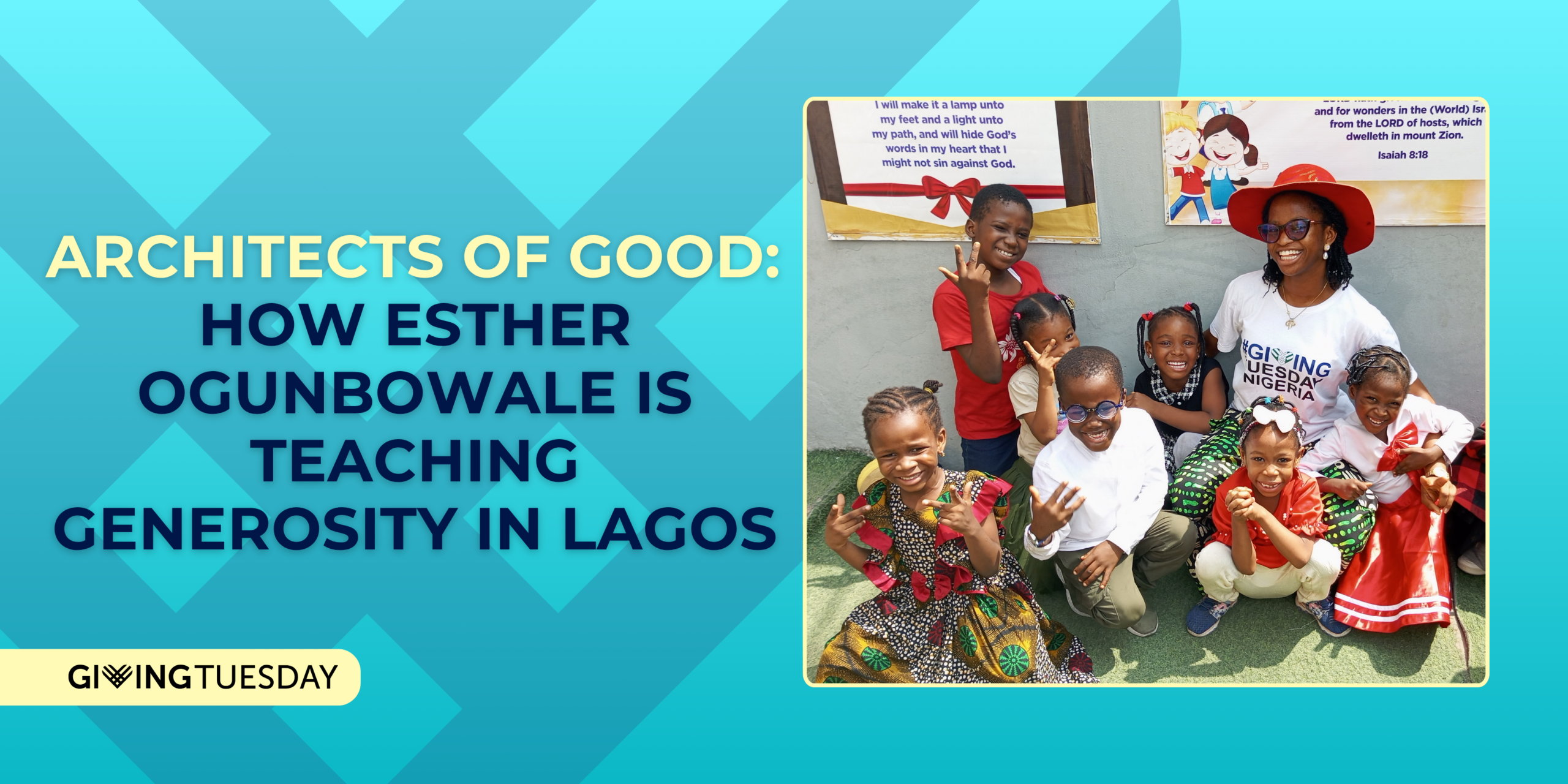
For Esther Inioluwa Ogunbowale, generosity starts in the classroom.
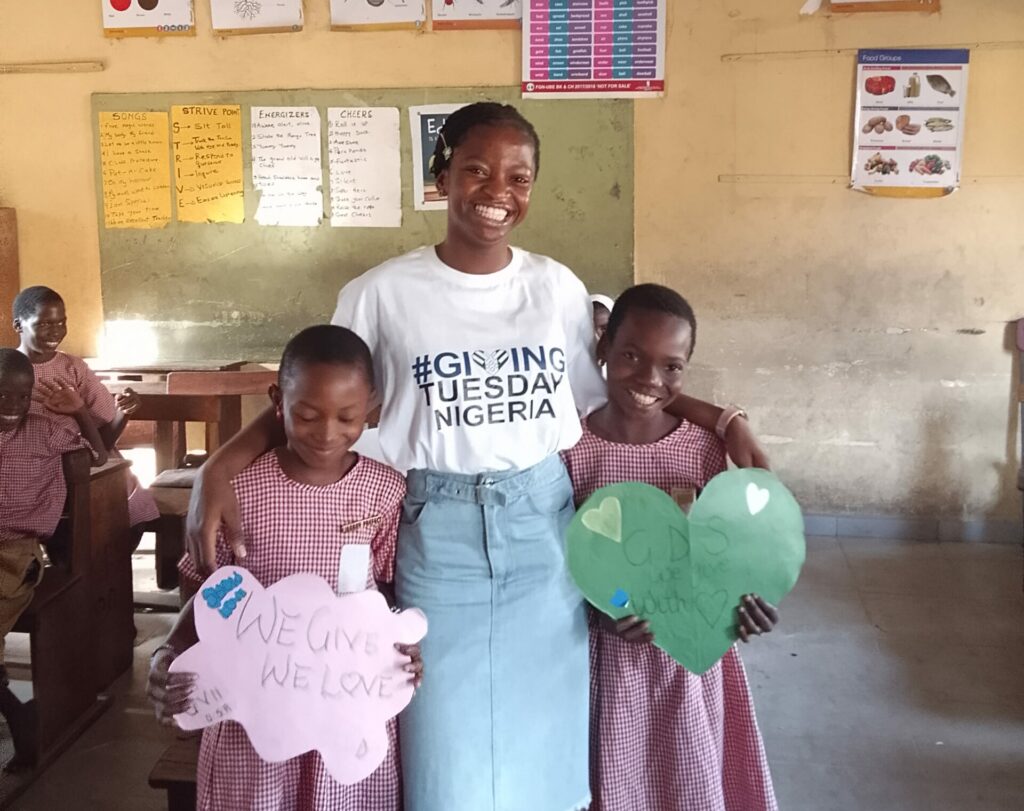
Based in Lagos, Esther is a GivingTuesday Spark Chapter Leader, early years educator, and Head of Programs at the ChariCare Impact Foundation who is helping students discover the power they already have to support their communities.
She describes herself as a “Becomer Architect” — a term rooted in her belief that young people are constantly becoming who they are meant to be. Through her work, she helps design the paths, experiences, and opportunities that support that journey. We spoke with Esther about the projects she’s leading through GivingTuesday Spark, what students have taught her about generosity, and why creating space for young people to lead matters so much.
Q&A with Esther Inioluwa Ogunbowale, Giving Tuesday Spark Chapter Leader, Lagos, Nigeria
Q: What inspires your passion for giving back?
My passion for giving back is rooted in a blueprint of service I inherited from my mother. Long before I understood the formal language of social impact, I was her shadow — watching her volunteer her time to mentor and guide young women through the MamaIette Foundation. She didn’t just talk about kindness; she lived it with a standard of excellence that stayed with me.
As the Becomer Architect, I’m also deeply inspired by the potential I see in the next generation. Working with my learners at Great Destination Schools has shown me that generosity is innate. Knowing that I can help bridge the gap between quality education and community service is what keeps my fire burning every single day.
Q: What inspired you to start engaging students in community impact and generosity?
The real “aha!” moment happened right in the middle of my preschool classroom. I would watch one of my little learners complain about not having a good pencil, and instantly, another student would offer theirs — even if it was the only one they had. Seeing that raw, natural kindness convinced me that generosity is already there; it just needs a space to grow.
Q: Can you share a bit about the projects you’ve led with your students?
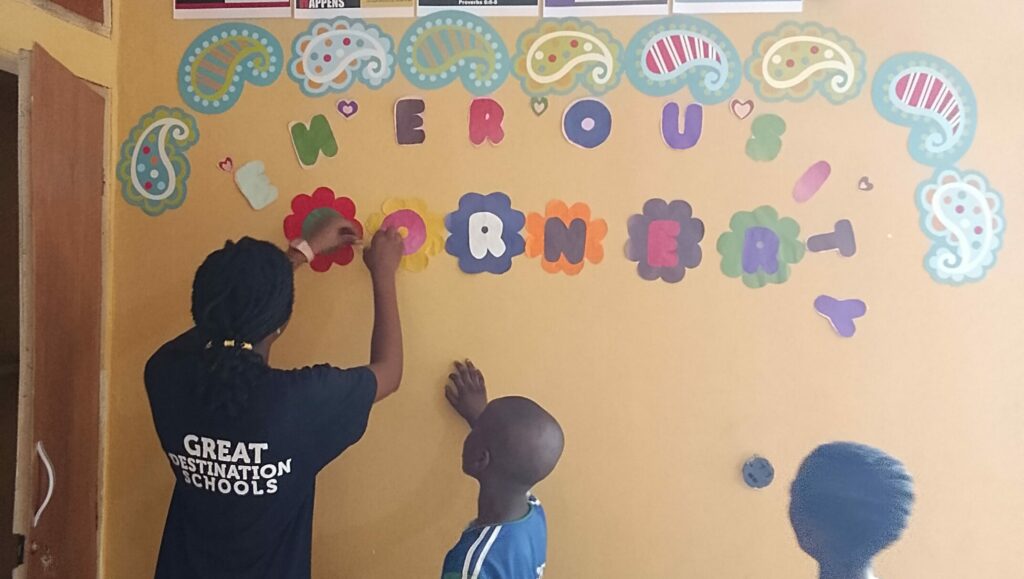
It’s been such a beautiful journey! In 2024, we launched the #GivingSeeds campaign. We set up a “Generosity Corner,” and I honestly stood back in awe as students took total charge — decorating the space with pride while others rallied their friends to bring in books, shoes, and clothes. When we delivered everything to Kiniwu Ifa Nursery and Primary, seeing my students connect with other children through their own acts of giving was a moment I’ll always carry with me.
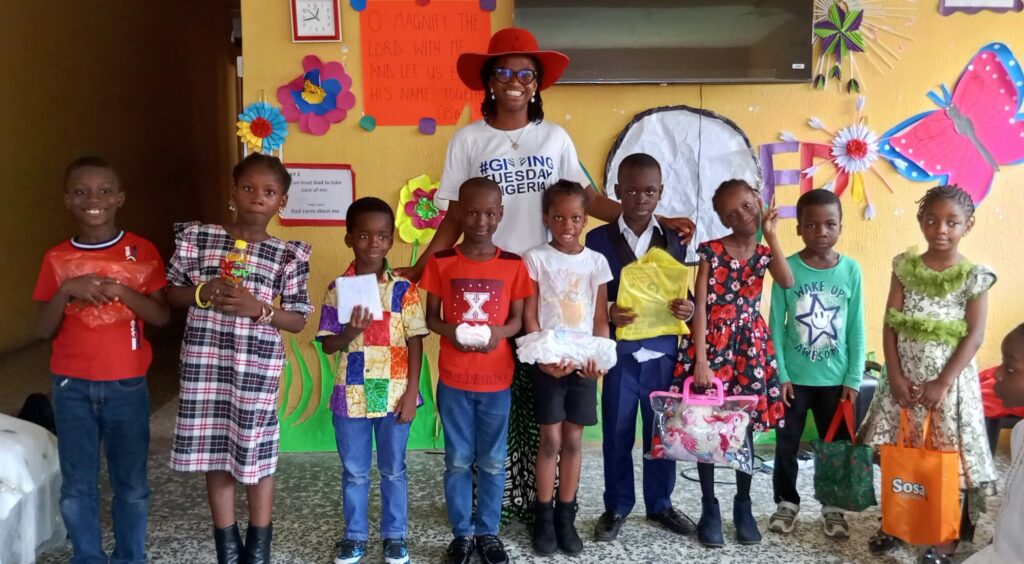
By 2025, we went deeper with “GDS Generosity in Action.” For weeks leading up to an in class celebration, students picked names and spent time intentionally preparing thoughtful gifts for one another. It wasn’t about the price tag; it was about the love.
But honestly, the project I’m most proud of is the one that happens in the quiet moments of my classroom. For example, when a student sees a friend struggling and rushes to help without being asked. These kids are truly becoming architects of a kinder world.
Q: How do you introduce the idea of giving and helping others to young people?
I introduce giving by making it visible, active, and something they can take ownership of. We started by bringing the conversation into our daily routine. During morning exercises, we held short sessions dedicated to the heart of giving, talking about why it matters and how even the smallest act can create a ripple effect.
From there, I introduce larger projects by giving students specific, meaningful roles. For the “Generosity Corner,” I didn’t just ask for donations; I invited them to be the engine behind the project: a creative team to design and decorate, and an outreach team to rally their peers. When they have a role, they stop seeing it as a school requirement and start seeing it as their own personal contribution to the world.
Ultimately, I want them to realize they already have the tools to be architects of good. By celebrating the small moments alongside the big projects, they learn that being a giver is simply part of who they are.
Q: What has surprised you most about how students respond to this work?
What has surprised me most is how much ownership they take when they realize they are being trusted to lead. During #GivingSeeds, I expected the students to be shy when we arrived at Kiniwu Ifa. Instead, they stepped up with so much confidence and maturity, hand-delivering donations and truly connecting with the other children.
But the most touching surprise came during “GDS Generosity in Action.” I was prepared for the kids to get caught up in the excitement of receiving gifts, but it was the exact opposite. Their focus wasn’t on “What am I getting?” but on “Will they like what I’ve prepared?” It has taught me that children don’t need to be taught how to be generous, they just need us to design the space for it.
Q: How do you encourage students to take on leadership roles in these projects?
I encourage leadership by stepping back and letting them be the architects of the mission. My philosophy is that I provide the blueprint, but they build the structure.
For our #GivingSeeds project, instead of telling them where to put the donations, I sat down with a group and asked, “How should we design our Generosity Corner?” That’s how our Creative Team was born. I also create specialized teams based on their natural strengths, an Outreach Team to rally peers, a Logistics Team to sort and organize donations, and Secret Mission Leads to check in on classmates during “GDS Generosity in Action.”
By giving them specific titles and real responsibilities, they stop seeing themselves as “just students” and start seeing themselves as change agents. I always tell them: “You don’t need a degree to be a leader; you just need a heart that’s ready to serve.”‘
Q: What are some simple ways teachers can start incorporating generosity or service into their classrooms?
Teaching generosity isn’t about adding another subject to an already busy timetable; it’s about changing the culture of the entire school. Here are a few things that have worked for us:
- Be the Living Blueprint: Let students catch the adults in the act. When educators handle a student’s mistake with extra grace, or when they are seen helping a colleague carry heavy boxes across the yard, it sends a powerful message. When kindness is the default mode for teachers, it naturally becomes the default for children too.
- Use the Morning Assembly: Treat generosity as a core skill, just like reading or math. Using those few minutes to talk about the importance of looking out for the “person standing next to you” creates a collective culture. When the whole school hears the same message of kindness at the same time, it follows them back into the hallways and the playground.
- Create Empowerment Teams with Real Roles: Instead of just asking for volunteers, give students specific titles and responsibilities. When a child feels in charge of a mission, the project stops being a school chore and becomes something they genuinely feel connected to.
- Peer-to-Peer Architects: Instead of the teacher being the only source of help, students can be commissioned as Lead Architects for subjects they’ve mastered. If a child understands a tricky math concept, they can spend time helping a classmate who is still figuring it out. This teaches them early that knowledge isn’t something to hoard, it’s a gift meant to be shared.
- Secret Missions of Kindness: Give each student a “Secret Buddy” for the week and task them with finding quiet, anonymous ways to make that person’s life easier — sharpening a pencil, tidying a desk, or leaving a “you’ve got this” note. It teaches them to be observant of others’ needs without expecting a thank you in return.
- Celebrate the Small Wins: It’s easy to reward the highest test score, but there is so much value in calling out the quiet acts of service. Whether it’s a student handing over their favorite pencil or helping a classmate carry a heavy bag, these moments deserve a big shout-out. By celebrating character as much as competence, the classroom begins to shift.
- The Generosity Gallery: Encourage students to share success stories from home — how they helped an elderly neighbor with groceries, taught a sibling a new skill, or shared a snack with a friend. Creating a space to share these moments proves that generosity doesn’t have a closing bell and that they have the power to impact their community every single day.
Q: What impact have you seen on your students and the communities you serve?
The biggest shift hasn’t just been in the number of items collected, but in the culture of empathy that now defines our daily life. The children now see themselves as people who have something to give, regardless of their age. They’ve realized they don’t need to wait until they’re grown up to make someone’s day better.
In the wider community, when the donations from #GivingSeeds reached the children at Kiniwu Ifa, it was about more than just the books and clothes, it was about the bridge built between the two schools. Perhaps the most rewarding part is hearing from parents that their children are choosing to share their birthday treats with neighbors or helping a younger sibling without being asked. These seeds of generosity are taking root far beyond the classroom.
Q: What is one challenge you’ve faced in this work, and how have you navigated it?
One of the biggest challenges was balancing passion with responsibility. Because students were so excited about the Generosity Corner, some began to see their tasks there as a convenient escape from their schoolwork. To navigate this, we reframed the projects not as a “break” from learning, but as a reward for finishing it, teaching them that true service requires discipline, not just enthusiasm.
Another hurdle was that not every heart caught the spark instantly. Some children needed more time and extra explanation to understand the “why” behind the “what.” It took patience and consistent storytelling to meet each child where they were.
Navigating these challenges came down to persistence. By consistently sharing the impact of our actions and keeping the Generosity Corner as a permanent, visible part of school life, resistance slowly turned into support. It taught us all that building something meaningful takes time.
Q: What advice would you give to other teachers or youth leaders who want to start similar initiatives?
First, you have to be intentional. Generosity doesn’t just happen by accident in a classroom; it has to be designed into the day. When students see that you are deliberate about it, they start to realize this isn’t just a “nice” thing to do, it’s who we are.
I’ll be honest: there will be days when it feels incredibly frustrating. That’s why you have to identify your “Why” early on. When things get tough, go back to that reason. That “Why” is what keeps you grounded when the excitement wears off.
Finally, stay motivated by the tiny wins. Don’t wait for a huge donation drive to feel successful. Look for the small moments, those are the real success stories. You are architecting a future where looking out for one another is the norm.