
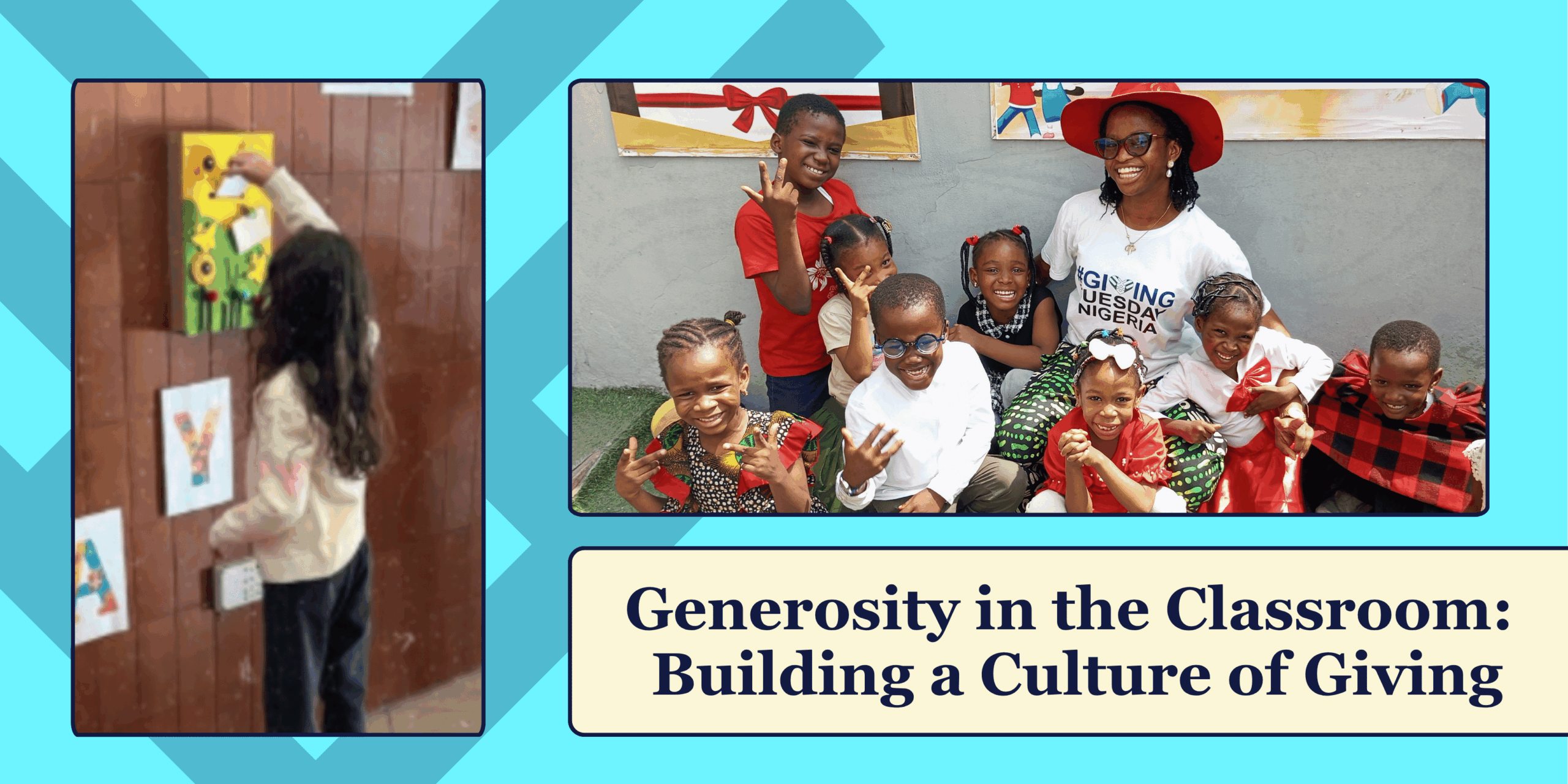
Young people are already finding ways to show up for others and support their communities. Educators can help build on that by giving students opportunities to explore generosity, take the lead, and foster their generous actions.
Giorgia Buselli of GivingTuesday Italy and Esther Inioluwa Ogunbowale, an early years educator and GivingTuesday Spark Chapter Leader in Lagos, Nigeria, are doing just that. Through projects, conversations, and hands-on experiences, they’re creating opportunities for students to practice kindness, take responsibility, and see how their actions can make a difference.
In Italy, Giorgia and the GivingTuesday Italy team developed A Scuola di Generosità, an educational initiative that brings the culture of generosity into classrooms. Through free educational resources, students explore generosity, solidarity, and active citizenship while learning how their everyday choices can contribute to their communities. As Giorgia explains:
“Generosity isn’t a passive concept: it’s an active choice and a muscle we must help young people flex every day.”
In Lagos, Esther takes a similarly hands-on approach with her students at Great Destination Schools. Through initiatives like #GivingSeeds and GDS Generosity in Action, her students have collected and shared donations, supported other children, and taken on leadership roles within their projects. But for Esther, some of the most meaningful examples of generosity happen in everyday moments—like a student offering a pencil to a classmate or helping out someone who is struggling. You can read more about Esther’s approach to bringing generosity into the classroom in our previous conversation with her, Architects of Good.
For Esther, this work is personal. She learned generosity by watching her mother show up for others, and now she sees it as part of her role as an educator to pass that example on to her students. As she puts it:
“I treat generosity as an everyday order of business in my classroom, not just an occasional holiday activity.”
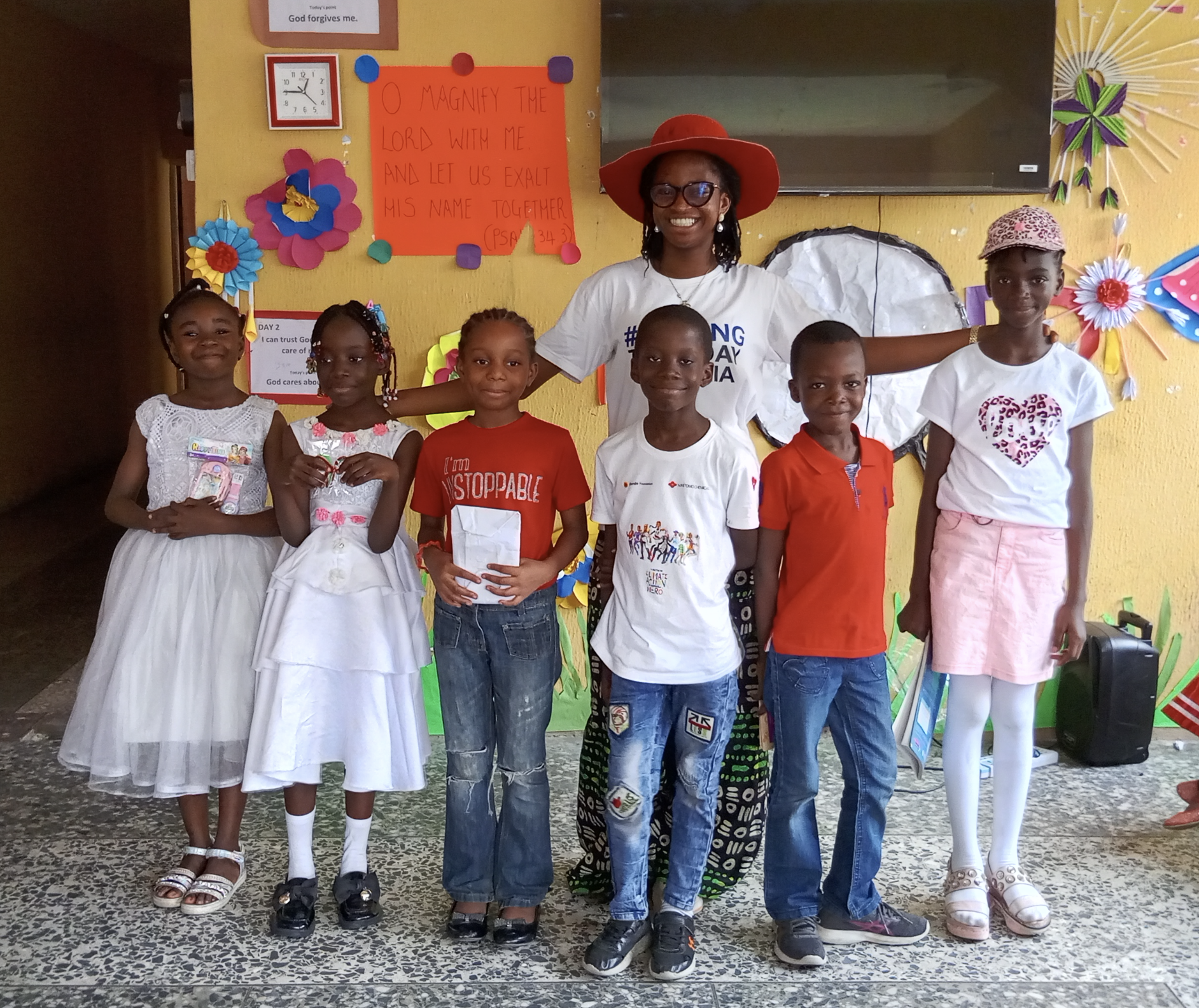
Her approach is about giving students the space and responsibility to participate, lead, and discover that they already have something to contribute.
While their approaches look different, both educators show how creating space for generosity can become part of the classroom culture.
You don’t need to build a large program to get started. A classroom conversation about helping others, a student-led service project, a peer-to-peer kindness activity, or a simple opportunity to share what generosity means to them can all be a starting point.
Bring Generosity Into Your Classroom
Our new Educator Resource Hub brings together free resources, activities, and ideas to help educators bring generosity into the classroom in meaningful, practical ways. Whether you’re looking for a ready-to-use activity or inspiration for a larger student-led project, explore the hub and find ideas to get started.