
Grandmothers are rightly celebrated for the support and care they provide within the home. But what about their role outside the family? Around the world, grandmothers are civic leaders, organizing their communities, stepping in when crisis hits, and filling the gaps where institutions fall short, yet there is little research into what they contribute.
This year, GivingTuesday’s Africa Hub set out to change that by shining a light on the civic leadership of grandmothers. In partnership with CivSource Africa, we launched the #GoGrandMa campaign, inviting people to share stories of grandmothers’ leadership, and featured these in a podcast series and at listening parties where people could learn about their contributions. Now we’re partnering with Grandmother Collective, a global network working to elevate and activate elder women, to continue to uplift and support grandmothers making change in their communities.
We spoke with Catherine Mwendwa, director of GivingTuesday’s Africa Hub, and Jennifer Hanks-Allaire, co-founder and board chair of Grandmother Collective, about why grandmothers are so often overlooked, and what changes when they start getting the recognition they’re due.
This conversation has been edited for length.
Catherine, where did this work with grandmothers begin for you?
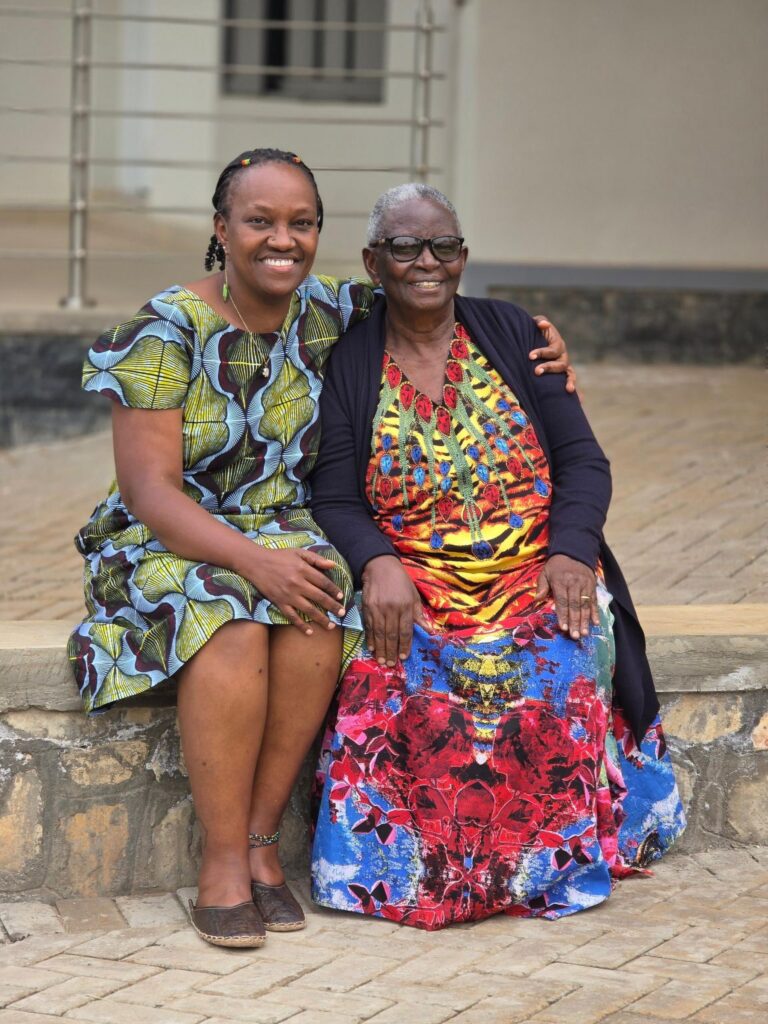
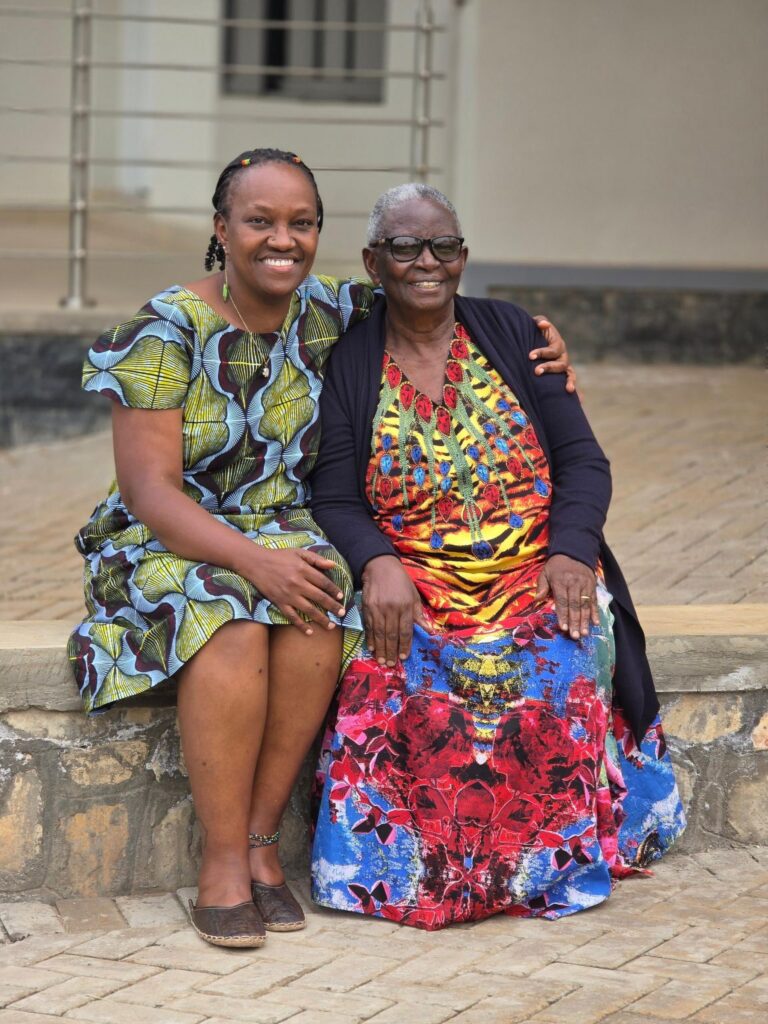
Catherine: It started with my own grandmother, Leah, who is turning 97 soon. At home, she is at the center of everything. We all go to her for advice, and she keeps track of every one of us with so much care, wherever we are in life. In 2022, Theo Sowa centered grandmothers in her opening remarks at the African Philanthropy Network conference in Uganda and I related deeply to her view that grandmothers are a significant part of the African philanthropy story because I have seen it in my own grandmother.
My grandmother’s leadership goes well beyond her family. People still call her “Mwarimu”, which means “teacher” in Meru, which she was, but also marks respect for someone whose leadership matters. Beyond the classroom, she held leadership roles in her church, which was the most organized institution in the community where women could convene at a third space. Her role gave her more exposure to economic and local leadership opportunities for women. From there she co-led several mutual aid groups, known in Kenya as chamas, or ikundi in Meru. She was also a leader in the district chapter of Maendeleo ya Wanawake, one of the most consequential women-led movements in Kenya. Above all, my grandmother is my first reference to feminism. She has shaped how I see the world and who I am as a leader.
Why are grandmothers so rarely seen or portrayed as leaders?
Jennifer: Part of it is that their generosity is so constant it becomes invisible. When Grandmother Collective started looking at grandmothers around the world, we expected differences. Instead we found universals, across Africa, South America, Asia, Europe and the U.S. Grandmothers work to make the world better for their grandchildren, and experience tells them that means making it better for the whole community. And they tend to do it quietly without looking for attention.
We have a hard time even finding grandmother groups, because when you look at organizations’ websites, the grandmothers aren’t there. The young people are put forward. Yet grandmothers are often the backbone of community organizations. In many ways they are the world’s social safety net. We saw it during the AIDS crisis in Africa, when grandmothers raised a generation of children, and we see it in crises everywhere. But because people assume grandmothers will be there, nobody asks what makes their role unique.
So what makes grandmothers so distinctive as leaders?
Jennifer: They’re politically savvy. They know how to get things done, without ruffling feathers and sometimes without anyone realizing they led. They can also be fearless. When something matters, whether it’s girls’ education or the climate, they will stand up. And because they’re so embedded in their communities, working with grandmothers becomes community-centered and culturally integrated by default. What they build tends to last, because it starts with what the community already has.
Catherine: Grandmothers have a unique influence across generations, but as a movement and in the development sector, we haven’t made the most of it yet.
When I worked on peace and community resilience, young people often said grandmothers had the most influence on them. At our recent listening party about generosity and grandmothers in Abuja, the audience recognized that influence as well. I believe this trust and influence is worth building on.
Grandmothers also create lasting institutions. As an art lover living in Lagos, Nike Gallery was one of the really cool art centers. I recently got to learn that it was founded by Nike Davies-Okundaye who learned textile arts from her grandmother. Now, as a grandmother herself supporting young fashion entrepreneurs, her influence extends far beyond Nigeria.
Catherine, how did GivingTuesday Africa come to focus on grandmothers?
Catherine: GivingTuesday celebrates generosity with the simple theory that everyone, everywhere has something to give in making the world a better place and that when people see how others give, they’re inspired to give too. Over the past two years, we set out to understand generosity in our own cultures, working as a collaboration with Trust Africa and a network of researchers across the continent who understand how traditions of giving influence how philanthropy is interpreted and practiced today. One of the things that came through strongly was that women are the custodians of these giving traditions and use their social capital to pass them on. Most of them, we found, were older women with traditions like Omugwo in Nigeria, where grandmothers care for new mothers, and similar variations having a great contribution to the care economy and maternal health.
So we started telling their stories, with CivSource Africa and others. Beyond building a narrative, we see storytelling as a way to understand how grandmothers give, and how we might better engage grandmothers in philanthropy in a way that isn’t extractive but respects how they gather and what they have to offer.
Jennifer, Grandmother Collective’s Tea for Change toolkit is built around that, meeting grandmothers where they already gather. What does it look like?
Jennifer: Yes, Tea for Change grew out of what we learned from grandmother programs in Africa. The approach is about bringing grandmothers together to meet and share something of themselves over tea, and learn what grandmothers everywhere have in common. From there, they can name the challenges in their community and come up with solutions. We’ve taken these methods to communities in the U.S., learning from the Global South.
One was Hemphill, Kentucky, after the 2022 floods. While the community waited for outside help, it was grandmothers who looked after everyone. From this experience, there was an awareness of the role grandmothers play and they invited us to come and do a Tea for Change workshop. We didn’t need to know their community. They understand the culture, they have the history and the pattern recognition.
Seeing mental health needs in their community, they were inspired by Friendship Bench in Zimbabwe, where grandmothers are trained to offer cognitive behavioral therapy in a local setting. By the time we left, the Kentucky grandmas had enlisted their network to engage a mental health trainer and someone had offered to build a community bench. No money changed hands. It was simply, “I know this person, they’ll do it for me. I’m a grandmother, I can get this done.”
How can we better support grandmothers as leaders?
Catherine: Most stories about grandmothers are about how much they’ve sacrificed to care for their communities. But what happens when grandmothers give so much that they reach a point where no one is caring for them? If we truly understood their contribution to the broader systems, what would it change about the policies and protections we put in place for older women? It isn’t only about what grandmothers give. It’s about how we, as a society, give back to them and what we need to collectively understand from them to engage them meaningfully.
Jennifer: That also means making sure they’re in positions of power and in the rooms where plans are made. After the Kentucky floods, grandmothers knew straight away that children needed somewhere to go all day, and how to get everyone their medication. Those are the human needs an agency can miss. Yet grandmothers are rarely at the table when crisis plans are drawn up. Instead, they’re the ones who pick up the pieces later on.
Where does the partnership go from here?
Jennifer: We hope GivingTuesday can help share the Tea for Change toolkit widely, so we see change at the local level and learn from it. GivingTuesday’s experience, in Africa and globally, deepens what we know about grandmothers’ work in different contexts, and its reach can help people everywhere see grandmothers as an abundant, underutilized force for good.
Catherine: I keep imagining a Tea for Change gathering in Mombasa and another in Delhi. What if there were a thousand, and we documented those conversations? What would they tell us? GivingTuesday has movements in more than 110 countries. What would it mean if each had its own grandmother campaign, designed with grandmothers? We also want to bring together what’s already known about grandmothers in philanthropy, from our own work and from the many others doing this.
What’s your message to funders who want to get involved?
Jennifer: If you want resilient, sustainable solutions that work, engage the grandmothers in a community. Grandmothers think about everyone, including men and boys. Fund grandmothers and you are also supporting girls, young people and whole communities. They are also the way into culture, which large funders often don’t understand how to engage with. Pilot something with grandmothers. When people do, it works.
Catherine: Invest in the researchers and universities studying women’s leadership roles to deepen our collective understanding of grandmothers’ leadership at a system level. And also ask what participatory grantmaking would look like if grandmothers led it. And work through networks and third spaces grandmothers enjoy being part of, trust and value.
Catherine, what do you want to leave us on?
Catherine: When I raised this work with Adɔyɛ, a network of women in philanthropy leadership in Africa I’m proud to be part of, the discussion was deeply personal for many of us. I reflected recently how someone pointed out that most visitors to South Africa go to Robben Island, and everyone knows where Mandela was held, but almost no one knows where the women were imprisoned. There’s too often silence about the role of women in movement leadership.
We need to document these stories, in a way that captures their experiences with authenticity through our oral traditions as well as in writing, and share them with young people, so we don’t lose them along the way. It is a big part of Africa’s legacy.
Get involved this GivingTuesday
- Host a Tea for Change during Generosity Week, Dec. 1-5.
- Listen and share: follow #GoGrandMa, listen to the Podcast series, and share a story of a grandmother who leads.
- Support grandmother-powered organizations:
- Friendship Bench (Zimbabwe): grandmothers delivering community mental health care
- Nyaka (Uganda): grandmothers at the heart of child protection and community resilience
- Grandmother Project (Senegal): intergenerational dialogue to advance girls’ rights
- Barefoot College International: training rural grandmothers as solar engineers and entrepreneurs
- Learn more: Grandmother Collective, CivSource Africa, Adɔyɛ.