 By Hannah Kindler, Senior Marketing Manager at GoFundMe
You’ve likely heard the narrative: Gen Z shows up online. They speak out. They care deeply about causes. Yet, that engagement doesn’t translate into meaningful impact, and when it comes to giving, action doesn’t always follow.
It’s a story repeated often enough to shape strategy. It influences how nonprofits prioritize audiences, where they invest, and who they expect to amplify their cause.
However, what if that story is incomplete? What if the issue isn’t that Gen Z isn’t giving, but that we’ve been looking for their generosity in the wrong places?
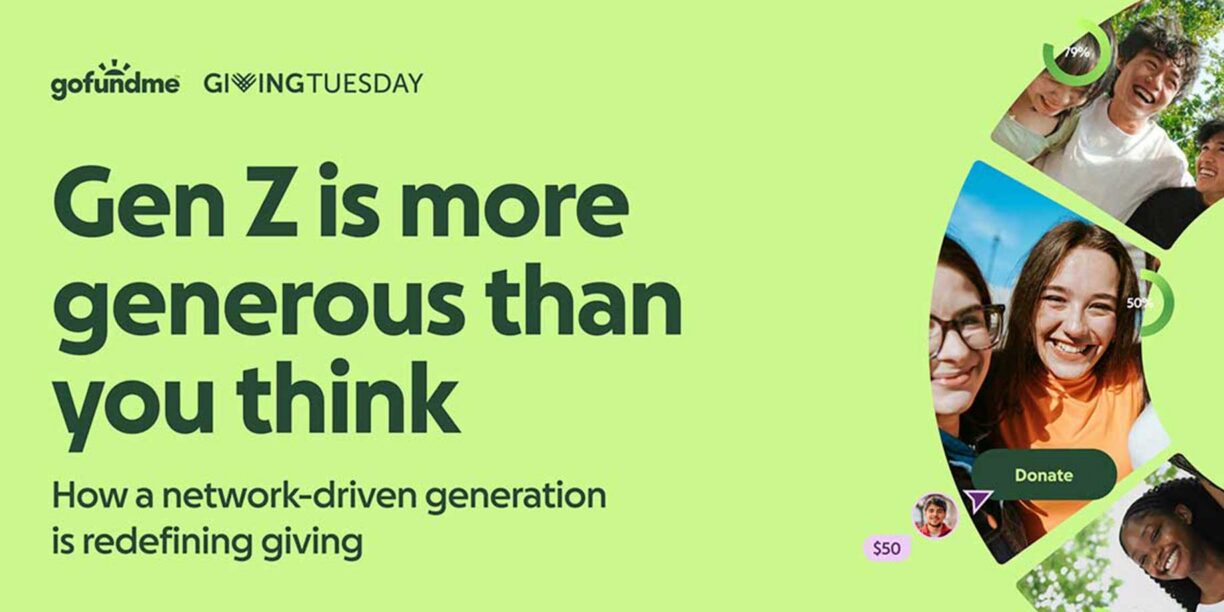
In our latest report, developed in partnership with GivingTuesday, we explore how Gen Z adults (18–29) participate in generosity and what that means for nonprofits looking to grow support. The findings challenge long-held assumptions and point to a clear shift: Gen Z isn’t disengaged. They’re redefining how help shows up.
Access the Full Report
The New Economics of Gen Z Generosity
The truth is that Gen Z actively participates in generosity, and at higher rates than other adults. More than 70% report some form of giving in the past week compared to 65% of adults aged 30–85.
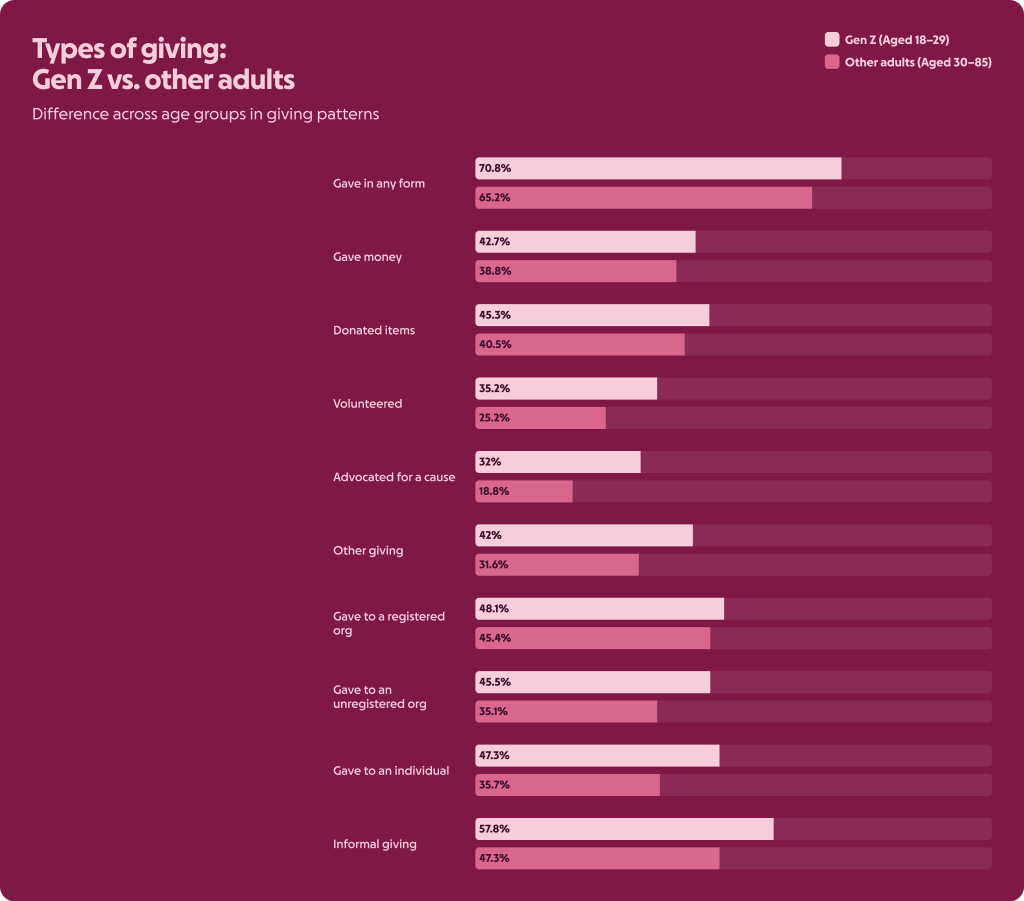
Their generosity is personal and immediate, often shaped by relationships and real-time needs. Nearly 60% say their decisions are influenced by family or peers, signaling a shift in how they build trust and where their actions begin.
That action is also highly visible. Gen Z is more likely to share the causes they support, turning individual acts of giving into a collective momentum. They don’t just participate. They amplify.
This is where supporter-led, community fundraising platforms play a critical role. While some worry these platforms divert resources from nonprofits, the data suggests the opposite. In fact, 91% of Gen Z who give through platforms like GoFundMe also give to registered nonprofits, making them 16 percentage points more likely to support nonprofits than those who give without using these platforms.
In other words, platforms like GoFundMe don’t fragment the giving landscape, but instead reshape how people enter and move through it. For many, supporting individuals and mobilizing their networks via community fundraising platforms is the first step into broader giving.
What This Means For Your Nonprofit
Gen Z is already shaping the future of giving, but engaging this audience will require a shift in approach.
Among Gen Z, participation often comes before a donation, and the path to giving isn’t always linear. This signals that nonprofits need to rethink how support begins and what defines real momentum.
Consider these three patterns:
- Gen Z engagement often starts with expression, not transactions
- Sharing plays a central role in how their giving grows
- Community-powered action can be an early step toward deeper support
These aren’t isolated behaviors. They’re part of a broader system that builds over time.
Explore the full report to see how these patterns connect and how to design for them.
The Bigger Picture
The takeaway isn’t just how Gen Z gives today, but where giving will go next.
As helping becomes more social, visible, and network-driven, the opportunity for nonprofits expands beyond traditional entry points.
This shift raises critical questions:
- How do you meet Gen Z supporters earlier in their journey?
- What does it take to turn their participation into sustained support?
- How do you build a model where visibility, networks, and community play a central role?
The answers are already starting to take shape.
Copy editor: Ayanna Julien