Just as Montreal is shaking off a long winter and stepping into the energy of a new season, Luca Mitran is doing the same.
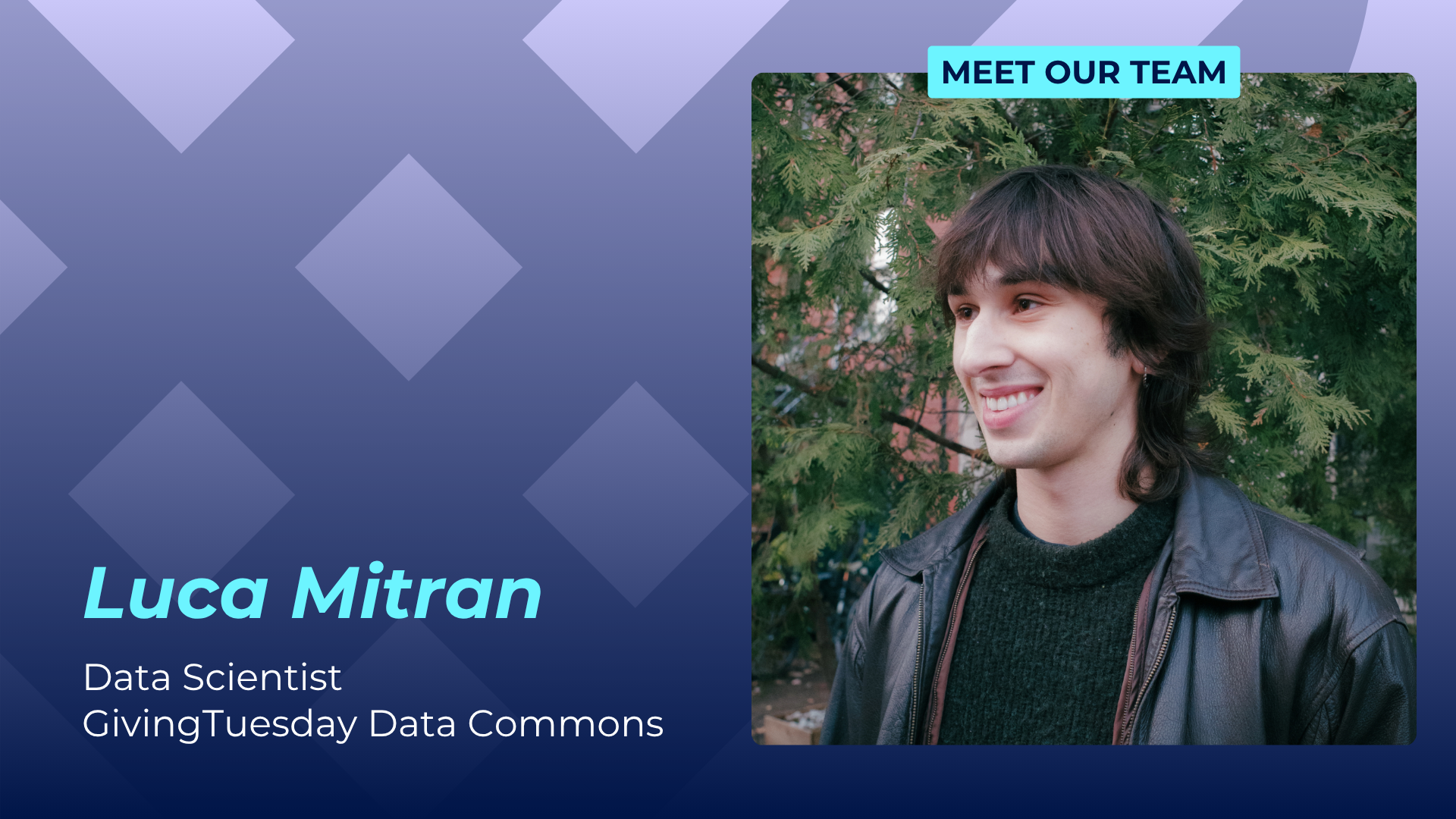
Meet Luca! He’s a Data Scientist on GivingTuesday’s Data Commons team and a self-described newcomer to the nonprofit world. After trading academic research for the dynamic challenges of the social sector, he’s bringing a fresh perspective and genuine curiosity to our work.
“As a researcher, there’s always a temptation to chase what’s intellectually interesting rather than what’s actually useful. It will be crucial for me to stay close to the context of the nonprofit sector to ensure that real needs are shaping the research and not the other way around,” says Luca.
Whether crunching the numbers on donations, curating Fundraising Effectiveness Project (FEP) reports, helping local artists build their online presence, or hauling gear at a DIY music show, Luca is approaching his work with the same spirit of generosity that inspires GivingTuesday leaders around the world.
Read on to get to know Luca a little better.
Meet Luca Mitran
In your own words, how would you describe your work at GivingTuesday?
As a Data Scientist at GivingTuesday, I help to turn data from our partners into meaningful insights that can drive success for the nonprofit sector. I primarily work on the Fundraising Effectiveness Project (FEP), a quarterly report which draws from a transaction-level dataset of hundreds of millions of transactions from tens of thousands of organizations. Recently, I’ve been working to expand the scope of our reporting within FEP by researching and implementing new metrics. I’m also interested in using FEP data to explore adjacent research questions of nonprofit behavior in relation to changing economic trends.
What’s something about you that your new teammates might be surprised to learn?
I’m relatively new to the world of nonprofits! As recently as last year, I was an undergraduate student in Cognitive Science, with a much more academic focus to my data science work. It has been challenging but extremely rewarding getting up to speed with all the moving parts and nuances of this sector and what it means to occupy a technical role in it.
What’s something that is making you laugh or bringing you joy?
The start of Spring in Montreal!
What is one thing you’ve learned about GivingTuesday since joining the team?
Just how widespread the movement is. From hubs in India, Africa, and beyond, to the various data partners we have supporting our work in North America, I’ve been really impressed with how GivingTuesday’s distributed leadership model has enabled such international growth.
How has generosity manifested in your day-to-day life?
I’ve been trying to integrate generous practices into my personal hobbies and social activities. For instance, as someone who listens to lots of music, I’ve started buying music and supporting artists directly rather than relying on streaming services. Working here has also inspired me to apply my technical skillset in a generosity-driven way, doing things like building portfolio websites for friends of mine who are artists to show off their work.
What would you tell someone who is interested in doing a GivingTuesday campaign?
Trust your knowledge of your community. GivingTuesday has taught me that the most successful campaigns are typically rooted in existing communities and movements rather than top-down strategies imposed from the outside. It’s also worth remembering that generosity takes many forms, so a campaign doesn’t have to be a fundraiser to be meaningful.
What is your favorite way to give back?
I like offering my time and services to local events. Here in Montreal, we have a strong DIY music scene, and though I’m no artist, people could always use help setting up, tearing down, doing all the unglamorous stuff that keeps events running. It’s a simple but gratifying way to help keep me looped in with people and places that have meant a lot to me.
In your first year at GivingTuesday, what do you hope to accomplish?
In my first year, I’m hoping to learn the sector well. That means understanding who our partners are, how the different parts of our organization connect, and what the pressing technical and operational needs of nonprofits are right now. As a researcher, there’s always a temptation to chase what’s intellectually interesting rather than what’s actually useful. I think it will be crucial for me to stay close to the real context of the nonprofit sector to ensure that people’s needs are shaping the research and not the other way around.