Mark your calendar: GivingTuesday is on December 1, 2026.
GivingTuesday is the day when millions of people around the world pause and ask, “What can I give?” and “How can I help?” — in hopes of turning those questions into action in the communities they care about.
If you’ve heard of GivingTuesday but only think of it only as “a day of fundraising,” you’re not alone, but you’re missing out on the full picture.
GivingTuesday isn’t a single 24-hour fundraising flash sale. It’s a year-round, worldwide movement built on the idea that generosity, whether that’s in the form of money, time, voice, goods or skill, can reshape communities when people show up and do something together.
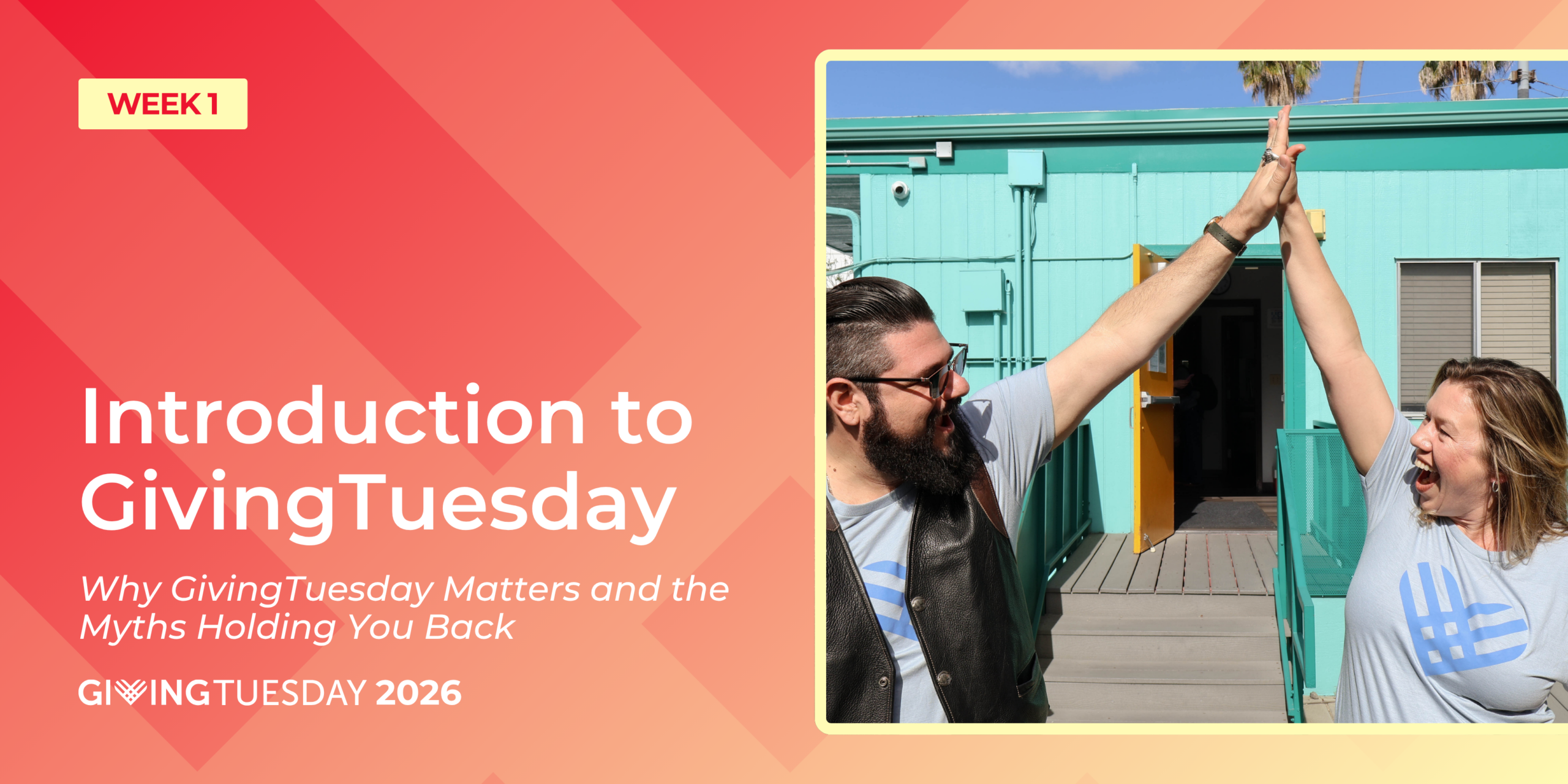
Ahead of the big day, we wanted to highlight the real story of why GivingTuesday matters, the myths that may be keeping organizations from getting the most out of it, and how generosity shows up differently in communities around the world.
From an Idea to a Global Movement
GivingTuesday started small. The idea for a day dedicated to giving back was all dreamt up at the 92nd Street Y in New York City in 2012. Initially, the hope was to counter a frenzy of holiday consumerism with something more generous. It didn’t stay small for long.
Since becoming an independent organization in 2019, GivingTuesday has grown into a truly global movement, powered by five Global Hubs, a youth leadership initiative called GivingTuesday Spark, and a research arm, the GivingTuesday Data Commons, which tracks how generosity behaviors s hift around the world and what they mean for communities and organizations.
Today, more than 110 country leaders and thousands of community campaigns keep the momentum going all year-long.
As GivingTuesday CEO Asha Curran has put it, when people unite around a shared purpose, “every act of generosity becomes a building block for real community change.”
Why You Should Participate in GivingTuesday
If you’re on the fence about whether GivingTuesday is worth your organization’s time, the numbers make a pretty strong argument.
You can raise more money. In the U.S. alone, GivingTuesday 2025 generated $4 billion, with 38.1 million participants. That brought the total raised since 2012 past $22.5 billion. And there’s room to grow.
And the impact isn’t limited to the U.S. The Online Giving Radar found that transaction volume on GivingTuesday in Latin America in 2024 was five times higher than on a typical day, with activity about 40% above the normal daily average.
You can rally more support. Generosity isn’t all about money. In 2025, 11.1 million people in the U.S. volunteered their time, and 20.9 million used their voice by sharing causes on social media and beyond.
GivingTuesday is as much a stage for advocacy as it is a fundraising and community engagement opportunity.
You can make a bigger impact. Organizations that skip GivingTuesday don’t avoid the noise, they miss the conversation entirely. Participating means controlling your own story instead of watching from the sidelines while a global community of givers moves without you.
In the U.S., counties with GivingTuesday community campaigns have 90% more dollars raised and 85% more donors per capita, showing just how powerful collective action can be when communities organize around a shared purpose.
Don’t Let the Myths Fool You: Here’s the Truth about GivingTuesday
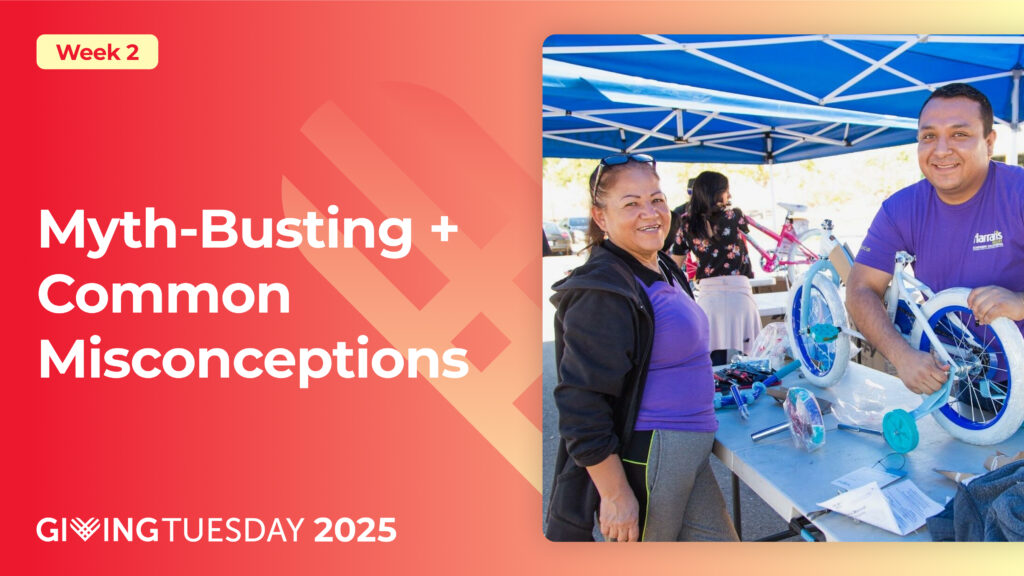
Even with all that momentum, a few common misconceptions keep people from getting the most out of the day. Let’s clear them up.
Myth: It’s an American thing.
This is the biggest myth the GivingTuesday global community runs into, as some people assume that GivingTuesday is a U.S. import that doesn’t translate locally.
The reality? GivingTuesday currently has over 110 country leaders working every day to spark acts of generosity in their communities, adapting and building their movement to reflect their local cultures, traditions, and needs.
Take the Czech Republic, where businesses have turned to GivingTuesday to spark acts of generosity. In 2025, GivingTuesday celebrated its 10th anniversary in the region. Since 2015, hundreds of thousands of individuals, companies, and organizations have taken part, collectively recording more than 2,600 acts of kindness on their GivingTuesday platform and donating over CZK 500 million.
Myth: GivingTuesday is only about fundraising.
Donations matter, but they’re only one part of GivingTuesday.
This is a true movement for generosity in every form. That means volunteering, advocacy, kindness, community-building, sharing skills, and more. In 2025, 13.5 million Americans donated goods and 11.1 million volunteered, proof that showing up looks different for everyone.
Dia de Doar, Brazil’s GivingTuesday, has become a vibrant platform that mobilizes individuals, organizations, businesses, and communities around the value of generosity, encouraging everyday giving practices across the country. Their 2024 campaign stood out for strengthening community-led initiatives and increasing corporate engagement, driving actions that promote daily giving outside of only donating money.
Myth: It’s just a one-day event.
The calendar says one day; the impact says otherwise.
Plenty of organizations leverage GivingTuesday to kick off year-end campaigns or launch new initiatives and the data backs that up: over 80% of 2024 donors who set up a recurring gift on GivingTuesday went on to make an additional gift before year’s end.
In 2025, the E-Shuddhi initiative in Karnataka collected 450 kilograms of e-waste during GivingTuesday-season drives, with proceeds supporting local schools and additional projects planned for 2026.
GivingTuesday India describes the annual celebration as “a gateway into a year-round culture of generosity.”
Myth: It’s too crowded for my organization to stand out.
GivingTuesday was never designed as a competition. It’s an invitation.
Some organizations worry that GivingTuesday will get lost among long-running national holiday campaigns and other year-end appeals. But being part of a larger movement can actually help organizations get noticed.
The organizations that stand out aren’t the biggest, they’re the ones telling the most authentic, specific stories about their work and inviting supporters in early.
Myth: You need to register to participate.
There’s no registration, no paperwork, no gatekeeping. GivingTuesday is free and open to anyone! Nonprofits, businesses, grassroots groups, individuals who want to point people toward a cause and a way to help.
Myth: GivingTuesday only matters for large nonprofits.
Smaller and grassroots organizations often outperform expectations because they can offer something big institutions often can’t: direct, personal relationships with their communities.
The India Hub’s UDARTA:EG research also found that organizations successfully engaging everyday givers span the spectrum, from grassroots community groups to established institutions, and from rural to urban communities. The research found no significant relationship between an organization’s size, location, cause area, or budget and its ability to engage everyday givers.
You don’t need to be a big organization, or even a nonprofit, to create an opportunity for generosity.
Myth: It’s hard to participate.
You don’t need a big budget, a huge social following, or a sophisticated campaign to take part in GivingTuesday. A fundraiser, volunteer day, community gathering, awareness push, or simple invitation to give can all be a starting point.
And participation doesn’t have to happen online. Across Africa, mobile money, USSD codes, in-person drives, and in-kind giving are central to how people give. The best way to participate is to meet your community where they are and create an opportunity for generosity that makes sense for them.
What Matters: However You Show Up, Keep Doing It
Whether you’re leading a national nonprofit or organizing a local mutual aid effort in your neighborhood, GivingTuesday is built to grow with you. There’s no single “right” way to participate. Do what reflects your community’s own culture of generosity and build on it over time.
Join GivingTuesday on December 1.
Right now, you have time to plan, but the real work of building relationships, telling inspiring stories, and inviting people to participate starts well before December 1. Get prepared today and get excited!
Bookmark GivingTuesday.org/Participate and sign up for the newsletter to stay in the loop as December 1 approaches! We’ll be sharing weekly ideas, resources, and inspiration to help you get ready.