Nearly two hundred years ago, Alexis de Tocqueville wandered across the United States and concluded that vibrant civic life was the engine, safeguard, and wellspring of democracy. The insights in his Democracy in America have echoed through the work of political scientist Robert Putnam, Nobel laureate Daron Acemoglu, and others who have reached similar conclusions about the power of civic processes — ideas near-gospel among those working at the intersection of democracy and civic life around the world.
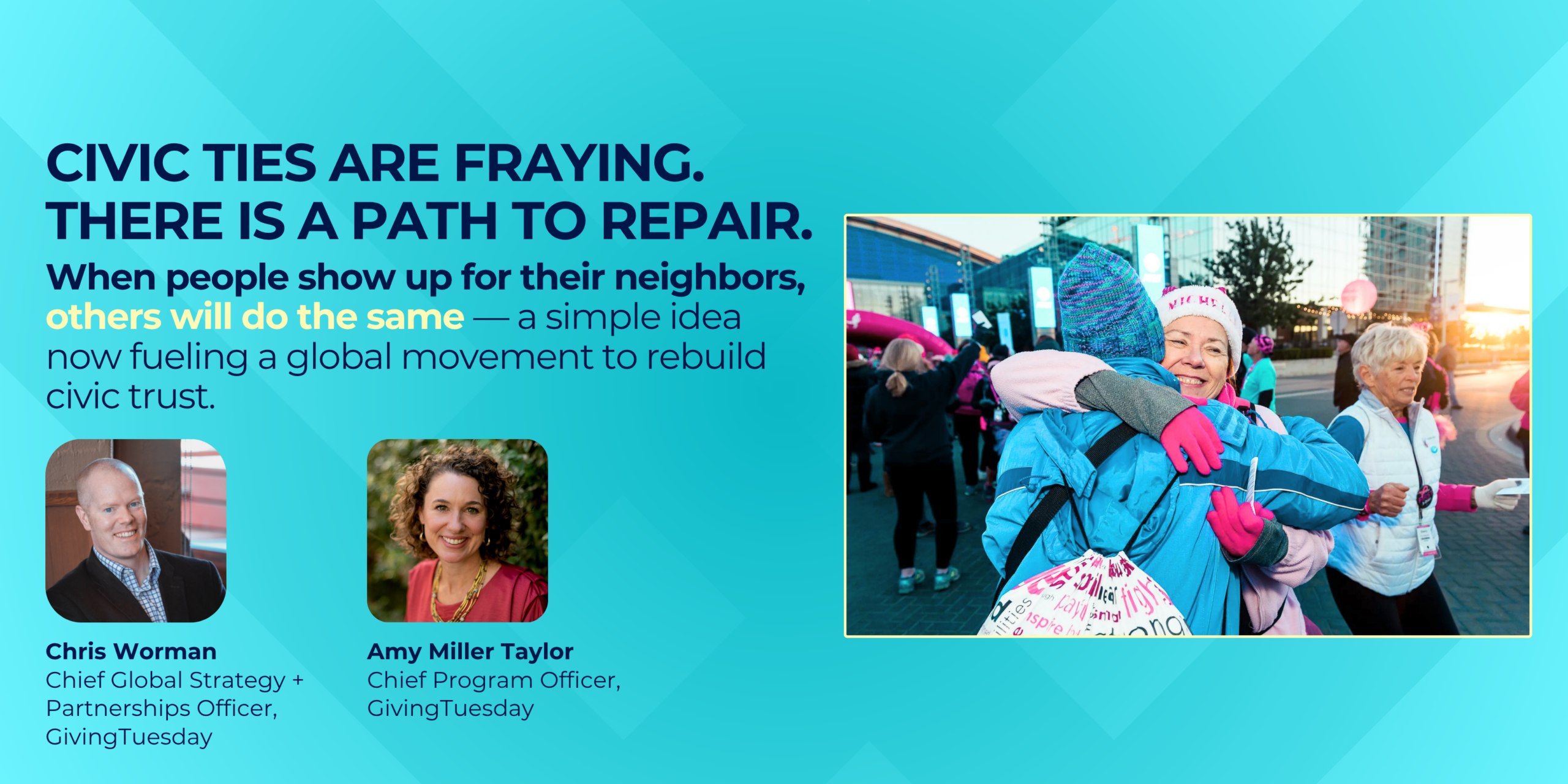
One wonders what de Tocqueville would make of America today. As the country marks its 250th birthday, our civic ties feel frayed. About the only thing Americans agree on is the feeling that the country is going in the wrong direction. Trust in each other is near record lows. And we doubt the morality of our fellow citizens.
We seem to be living in what some are calling a collective illusion: a widespread belief that other people are bad when the evidence is quite the opposite. Yet, at the same time, civic engagement is rising, especially among younger generations. Americans are giving and volunteering more even as political discourse becomes more divisive.
Unfortunately our illusions can become our reality. If we believe our neighbors to be untrustworthy and immoral, we are less inclined to reach out and find out if that is true. The problem is particularly acute given that Americans spend nearly half their free time alone. The negative effects of isolation are compounded further by a digital media environment engineered to sort us into bubbles, affirm our beliefs, and keep us scrolling – rather than bridging divides. The more we withdraw and the less we talk to each other, the more the illusion that we can’t trust each other hardens, creating a negative feedback loop.
Trust Through Connection
There are clear ways to reverse this collective illusion and catalyse positive feedback loops that decrease alienation, cultivate social trust, and foster solidarity.
GivingPulse — our weekly survey tracking giving trends in the US — finds that when people participate in generosity-focused activities, they are markedly more likely to find common purpose and resist divisive influences. People who trust others are nearly twice as likely to give money to nonprofits as those who don’t — and highly trusting people are more likely to express less polar views, including willingness to help those with different beliefs. People who give their time show even higher levels of trust.
Beyond building trust, giving back is one of the biggest drivers of happiness we know of; it more than doubles the likelihood that an individual will do so again; and fosters a belief that giving back is a virtue. The positive reinforcement between the action of giving back, good feelings when doing so, belief that the act is a virtue, and actually seeing our community in action all reinforce each other, starting a positive feedback loop away from the collective illusion. Americans are certainly open to taking steps toward a more positive future. 80% of Americans say they’d help others — including people they disagree with politically or culturally — if somebody asked them to. But they are rarely asked.
People Want to Help, but Need to Be Asked
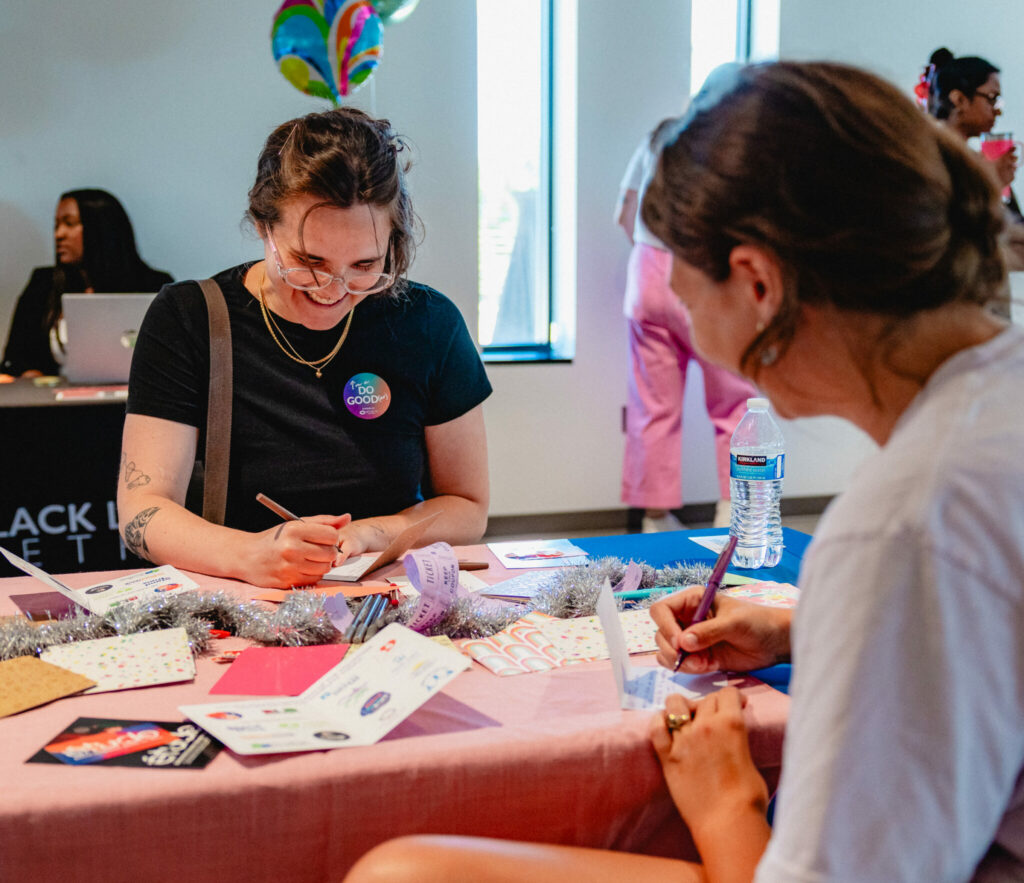
That’s why we’re asking. On June 23rd, we celebrated our first TogetherTuesday as part of Be The People — an invitation for people across the country to come together in community however they were inspired to do so. With our nonprofit, corporate, and foundation partners, we invited people to commit small acts of generosity: check in on a neighbor, volunteer with friends, share a skill, organize a tool swap, host a cleanup. We are still crunching the numbers, but we know that in more than 300 communities across the country, people answered the invitation, got together with their friends and neighbors, and did some good. All this activity matters, but even more important is the fact that people did something, and did it with others. This is the antithesis of what ails us.
If the growth of GivingTuesday from a hashtag into a global movement is any indication, these ‘day of’ invitations work. But of course they aren’t about a single day. They’re about building our civic muscle, one generous act at a time; hooking people on the fun, power, and joy of working together so they do it again and again, each time strengthening the resilience and connectedness of the community in which it takes place. These are the positive feedback loops that build democracy.
From a Day to a Practice
Efforts like GivingTuesday and TogetherTuesday introduce us to those who want to go further. The GivingTuesday Community Campaign Accelerator is built for them. The Accelerator works with place-based organizers and community foundations to design and deliver local, cause-agnostic giving campaigns — giving days, volunteer drives, nonprofit fairs, community clean-ups — that bring together nonprofits, schools, local businesses, and government to celebrate and practice their generosity. Participants receive dedicated training, 1:1 coaching, peer learning, and analytical support to baseline engagement, measure what’s working, and course correct in real time.
There are more than 800 Community Campaigns around the world today. We’ve been monitoring their emergence and impact over the last decade and, long story short, they work. In the US, communities running Community Campaigns raise 90% more in donations and engage 85% more donors than communities without, while strengthening connections between residents, businesses, and nonprofits, creating networks that can mobilize when communities need them most.
When people look up and engage — and when they see their neighbors do it — they experience the power and joy of civic action. As they do, they give back more, and more broadly, especially when they do so together, collectively, and publicly. After more than a decade of such campaigns, our campaign leaders find that giving back becomes “just something we do.” Sure, these campaigns raise money, but more importantly, they also cultivate cultures of civic generosity that last.
Growing Globally
Partners around the world have been equally excited about the potential for this work in their contexts. Since last summer, GivingTuesday country leaders have partnered with philanthropy organizations and community organizers eager to adopt and adapt the Accelerator to their contexts. To date, more than 300 organizers joined an online accelerator in Brazil. Eighty signed up for training in India. Several communities in Nigeria recently ran Generosity Festivals. With commitments from the Ford Foundation and Conrad N. Hilton Foundation, we’ve launched a coalition with the West Africa Civil Society Institute and Kenya Community Development Fund to adapt and run the Accelerator in several countries across Africa.
The appeal is clear. The traditions of mutual aid, solidarity, and generosity that underpin civic life are as robust around the world as they are in America — often more so. The same digitally-exacerbated anxieties about division and isolation are present. Meanwhile funding for civic infrastructure and civil society development has been falling, often sharply.
This is a gap to address. Resources have flowed to service delivery, and sometimes to policy, but little to the infrastructure of civic engagement. Sustaining and evolving the spirit of participatory democracy that de Tocqueville saw in America, fostering civic action as civil society’s source and insurance, requires investing in the human and technical infrastructures that enable it.
That is the choice in front of us. We can let the collective illusion harden into reality — where neighbors assume the worst of each other and the institutions of civic life keep thinning. Or we can invest in the people, organizations, and campaigns that invite people to show up for each other, and give them reasons to keep doing it – to build our collective belief in each other, our faith in civic processes, one generous act at a time. That’s work we can all lean into, and philanthropy can fund. We’d be glad of the company.