I’ve spent most of my career in rooms where people are trying to solve hard problems—corruption, broken governance systems, attacks on civic space. Important work. Necessary work. But also, exhausting work. The kind that can make you forget what’s possible when you start with what people already want to do: help each other.
On December 2, 38.1 million Americans participated in GivingTuesday, donating $4 billion and bringing the generosity movement’s total giving since 2012 to $22.5 billion. But here’s what strikes me most about those numbers: the 20% increase in volunteering and the 26% jump in people speaking out about causes they care about. This isn’t just about money moving. It’s about people taking action. Together.
A few months into my work with GivingTuesday, I’m still learning what it means to work in a space defined not by what we’re fighting against, but by what we’re celebrating: generosity. It’s the impulse to give, to volunteer, to show up for your neighbor, and here’s what our data keeps showing: Most people are already wired this way. They just haven’t been asked to join in.
Our GivingPulse research reveals that roughly half of Americans don’t recall being invited to participate in their communities. But when they are invited? They respond. Counties with GivingTuesday community campaigns see 85% more donors and volunteers than counties without them. That’s not because people suddenly became more generous—it’s because someone created a moment, extended an invitation, and made participation visible.
What if the barrier to civic participation isn’t apathy, but simply the absence of an ask?
There’s something else the data tells us. When people believe their community shares their values around helping others, and when they perceive generosity around them, their own civic engagement increases significantly. We’re not just asking people to give. We’re making generosity visible and creating what we call “civic intent,” or the intent to help others. And visible generosity, it turns out, is contagious.
What if we made visible all of the ways that people step up everyday to help out others in need?
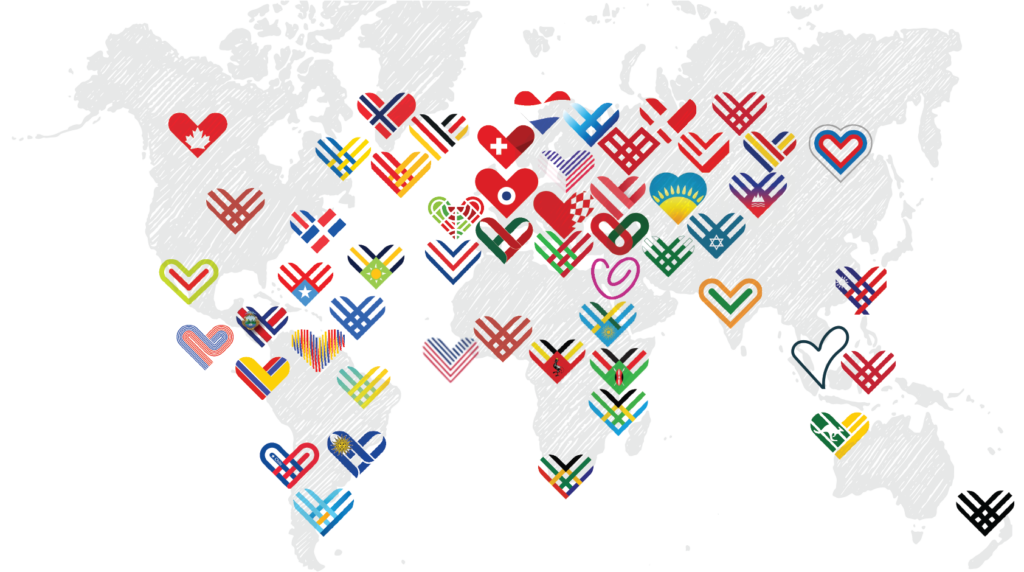
This is where GivingTuesday’s distributed leadership model is transformative—it’s how we ensure everyone really is invited. The movement is intentionally unbranded and open-source. Anyone can access our resources, adapt them, and organize their own celebration of generosity around any cause or community at any time. We now have over 400 community leaders in the US and leaders in more than 110 countries who’ve done exactly that, with each leader adapting the invitation for their context and each making it their own.
These aren’t GivingTuesday representatives; they’re movement owners. They understand their communities’ cultures, speak their languages, and know their networks. They decide what generosity looks like, which causes to champion, and how to extend the invitation. Our role is to provide what enables their leadership: tools, connections, data, and a global community learning together. This open architecture is what makes the invitation truly universal. You don’t need permission or partnership to participate, just the desire to celebrate generosity where you are.
What if everyone seized the opportunity to grow generosity in big and small ways in their community?
In a moment defined by division, isolation, and powerlessness, GivingTuesday offers something genuinely counter-cultural: a celebration of our interdependence.
When someone organizes a community giving day, they’re not just raising funds. They’re building networks, strengthening trust, and demonstrating that collective action is possible. They’re practicing democracy at its most fundamental level. They are embodying, building, and resourcing civic life, civil society, and the world they want.
For me, GivingTuesday is an important reminder that change doesn’t always require struggle. Sometimes it just requires inviting people to bring what they already have.
And the invitation is open to everyone.