This past year, GivingTuesday marked its 10th anniversary in the Czech Republic. Over the past decade, hundreds of thousands of individuals, companies, and organizations have taken part, collectively recording more than 2,600 acts of kindness on the GivingTuesday platform and donating over CZK 500 million.
The anniversary also highlighted how the movement continues to evolve. In 2025, GivingTuesday focused on blood donation through a joint initiative led by the Association of Social Responsibility and the Ministry of Health, resulting in 155 liters of donated blood. The milestone was further marked by the release of the book Štědré úterý and by practical community activities, including a hands-on cooking workshop organized with the Czech Federation of Food Banks and chefs from Aramark.
“Why do we need generosity right now? We live in a time when the world has sped up so much that sometimes we barely finish a sentence before its meaning changes. Every day, we are flooded with so much information that, as a form of self-defence, we have developed a new kind of armor. We have learned to let things pass us by, to keep them at a distance, and not to linger too long on emotions.
But in the process, something essential is quietly slipping away – something no society can sustain itself without in the long run: the sense that we care about one another. And that is precisely why generosity matters so much right now. Not as charity. Not as a gesture. But as a way to remind ourselves that we are connected, and that we genuinely care about each other,” said Lucie Mádlová, Founder and CEO of the Association for Social Responsibility (A‑CSR), which leads GivingTuesday in Czechia.
From Corporate Donations to Shared Decision-Making
Beyond the numbers, GivingTuesday in the Czech Republic has become a platform that reflects core movement values such as co-ownership, shared leadership, and collective impact. Companies increasingly use GivingTuesday not only to show how much they give, but how they give. Rather than one-off, top-down decisions, philanthropy becomes a shared, employee-led process shaped across roles, regions, and even countries.
The following case studies illustrate how this approach translates into authenticity, long-term engagement, and truly collective impact.
ČEPS
Shared Decision-Making as the Foundation of Giving
For the fifth consecutive year, ČEPS has taken part in GivingTuesday through its internal initiative Štědré dny ČEPS (Generous Days of ČEPS). The principle is simple yet fundamental: decisions about support are not made solely by leadership, but collectively by employees.
Throughout December, employees are introduced to selected nonprofit projects aligned with both the values of GivingTuesday and the company’s donor program. Through internal voting, they decide which organizations receive corporate funding. At the same time, employees can participate individually through voluntary payroll deductions.
In total, more than CZK 600,000 was distributed to support people with disabilities, seniors, and caregiving families. The most important outcome, however, was not the financial amound itself, but the fact that employees were genuine co-creators of the initiative and had real influence over where and how support was directed.
ČEZ
When Individual Contributions Multiply
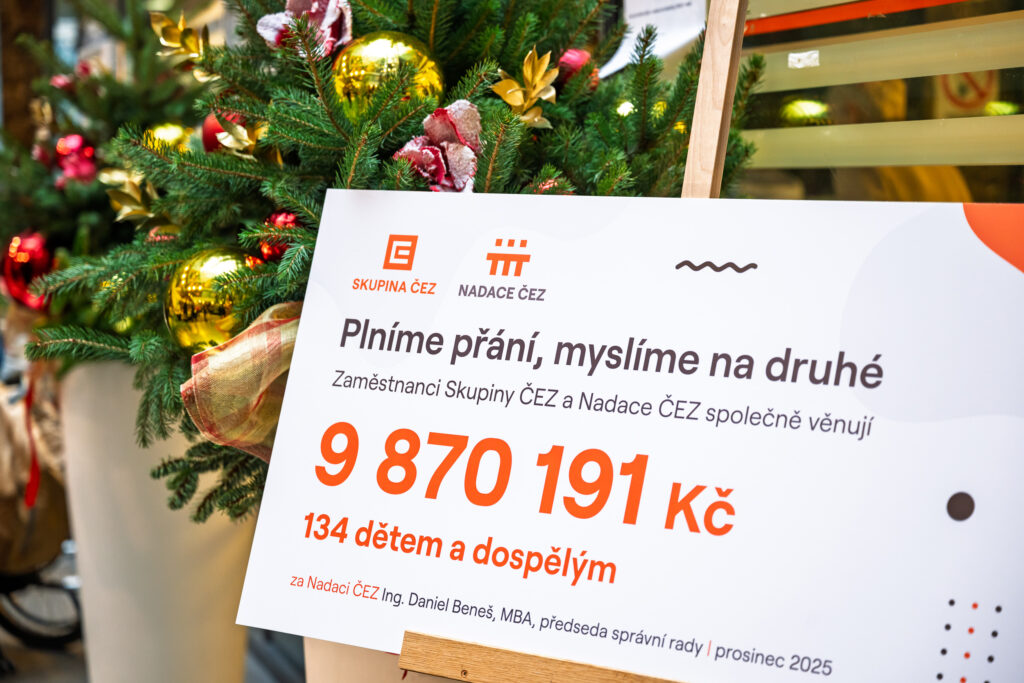
The ČEZ Group has long participated in GivingTuesday through the employee-led initiative Plníme přání (We Fulfil Wishes), implemented by the ČEZ Foundation. At the heart of the program is a personal connection: employees nominate people from their own communities who are facing difficult life situations and need support.
More than 2,200 employees contributed to the fundraising effort, collectively raising CZK 4.9 million. On GivingTuesday, the ČEZ Foundation matched this amount, doubling the total impact to CZK 9.8 million, the highest sum in the project’s history. The Plníme přání initiative has been linked to GivingTuesday for many years, and since its launch in 2007, employees, together with the ČEZ Foundation, have donated more than CZK 37.5 million.
This approach clearly demonstrates the power of collective action. Individual employee decisions, amplified by corporate commitment, translate into long-term, systemic support for people with disabilities, children, and their families.
Albatros Media
Small Actions Coming Together to Create Tangible Impact
At Albatros Media, GivingTuesday is part of a broader initiative called The Art of Helping, which highlights that doing good does not have to take a purely financial form. The company has long embraced material support, volunteering, and sharing.
As part of GivingTuesday, Albatros Media donated children’s books to the Jindříšek Foundation, which supports families caring for seriously ill children. Employees also take part each year in the nationwide Krabice od bot (Shoebox) campaign and in a material collection supporting a charity bazaar at Thomayer Hospital.
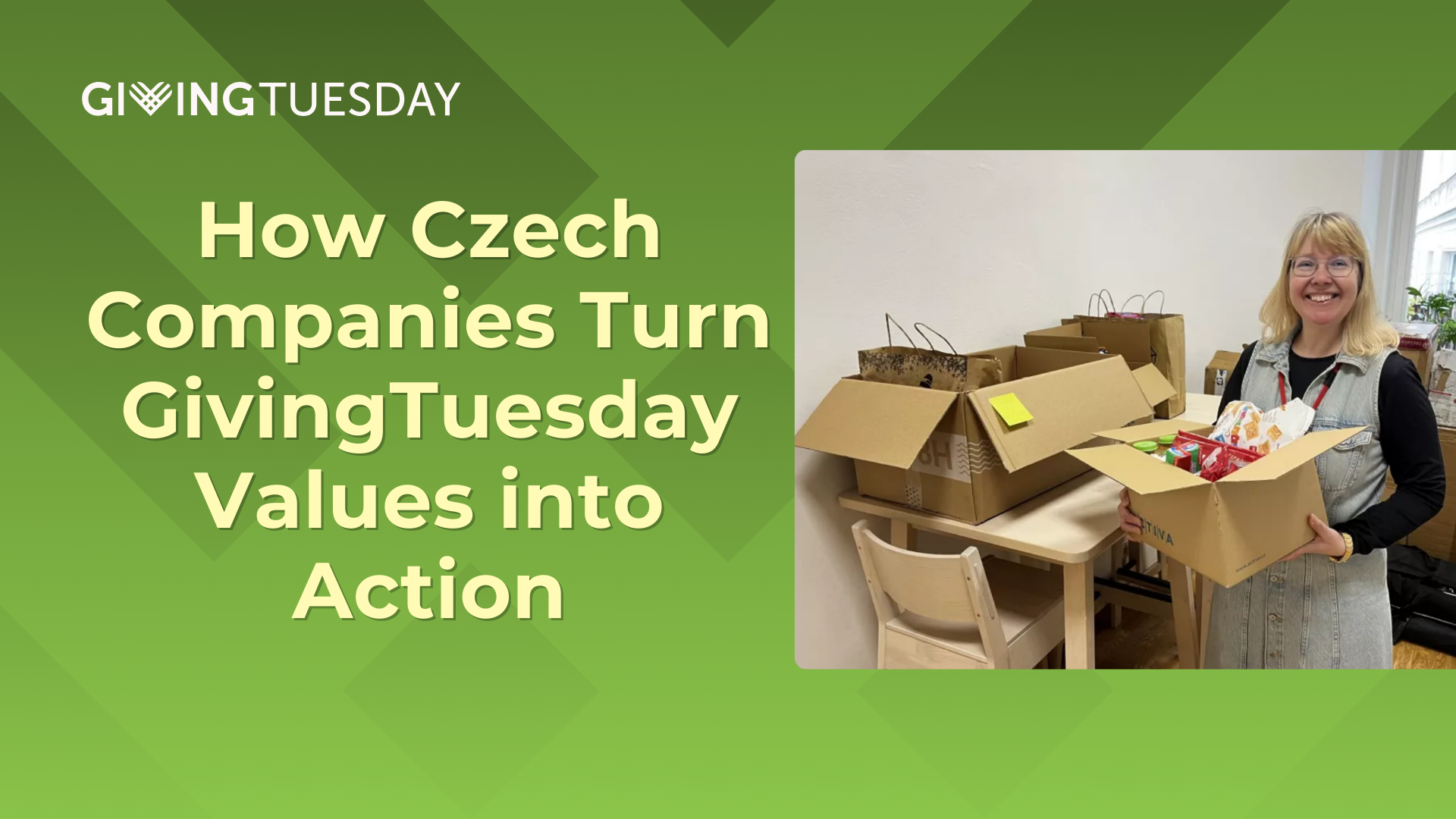
The initiative culminated in a shared gift-packing event that strengthened not only the support itself but employees’ sense of belonging. GivingTuesday served as a natural point of connection, bringing together individual activities into a single shared story.
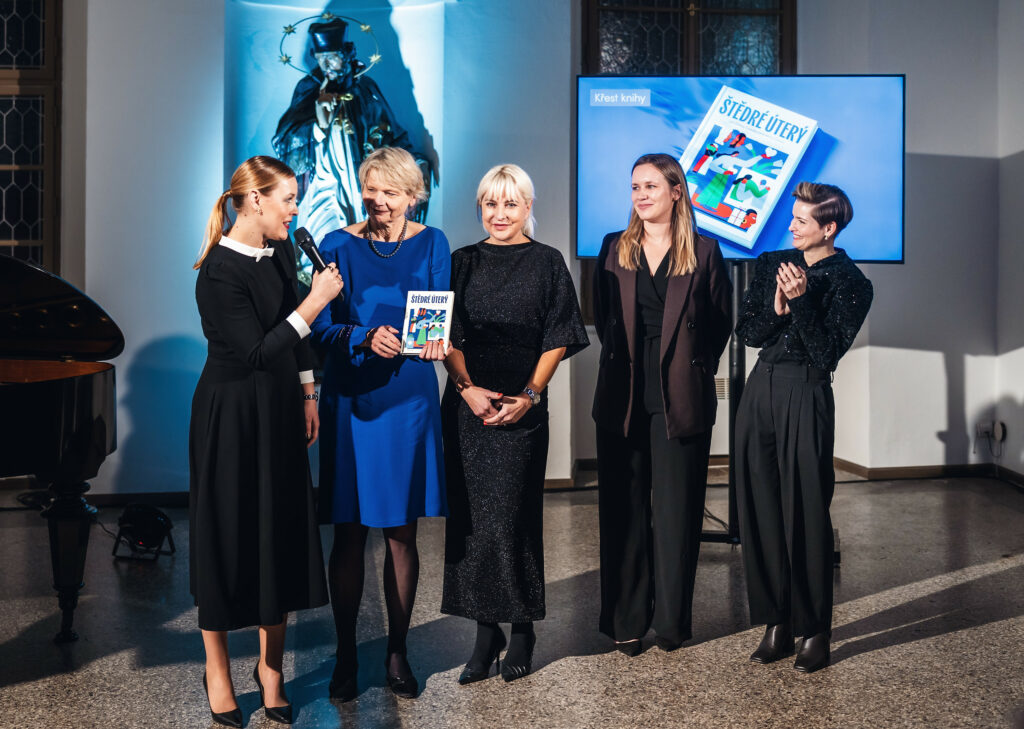
Albatros Media’s involvement also reflected the broader context of GivingTuesday in the Czech Republic. To mark 10 years of the movement, a book titled GivingTuesday: How GivingTuesday Transformed the Czech Republic was created in collaboration with the Association of Social Responsibility. The publication, capturing stories of generosity from the past decade, was released on GivingTuesday, December 2, 2025, by Pointa Publishing in cooperation with Albatros Media.
DPD
Local Engagement with Regional Reach
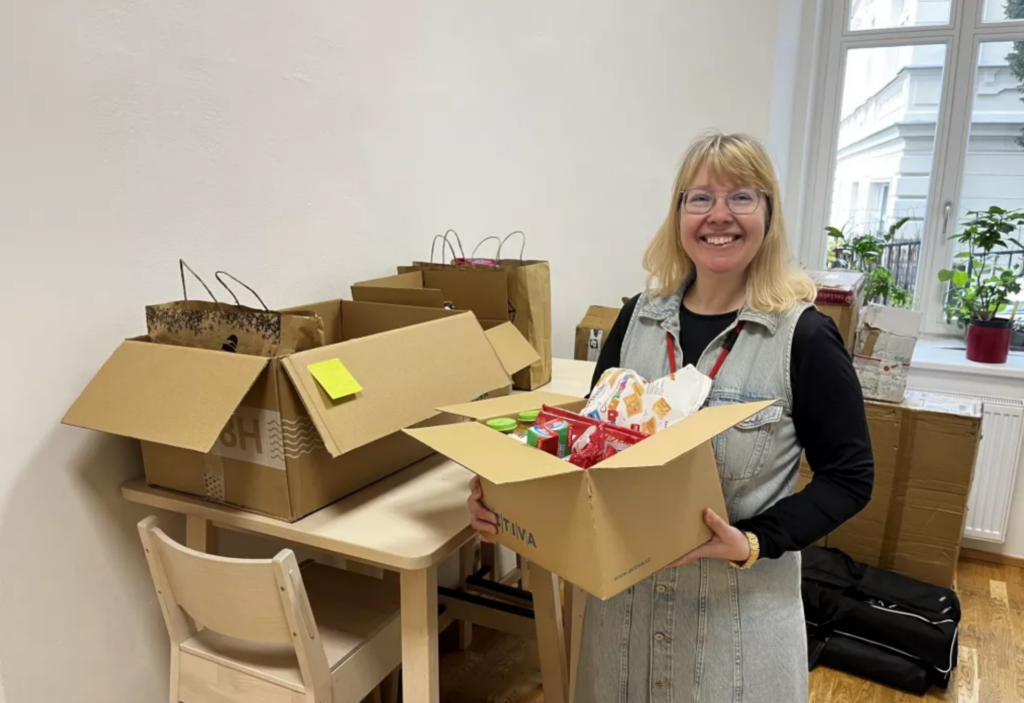
DPD uses GivingTuesday as a framework to connect employees across branches and countries. From late November through GivingTuesday, food and material collections take place at all depots in the Czech Republic in cooperation with the Czech Federation of Food Banks. Employees donate non-perishable food and hygiene products to support people in need.
In 2025, the initiative expanded to other countries across the CEE region. In Slovakia, the collection is organized in cooperation with a local food bank and the GivingTuesday platform. In Croatia, support is directed to SOS Children’s Villages, with employees donating items based on the organization’s current needs. In Slovenia, colleagues have long been involved in collections of sweets for children from socially disadvantaged families.
Through this approach, DPD demonstrates how GivingTuesday can serve as a shared language for both local initiatives and cross-border collaboration, helping to spread the values of the movement even in places where it is still emerging.
What These Stories Have in Common
While each approach is different, all of these examples share the same foundation. GivingTuesday is not treated as a one-day activity or a symbolic corporate gesture. Instead, it functions as an open framework that allows employees to take shared responsibility, engage in ways that feel meaningful to them, and collectively create positive impact.
It is precisely this sense of co-ownership and emphasis on collective action that explains why GivingTuesday has grown into a global movement, rather than remaining just another date on the calendar.
Organizations looking to strengthen their own GivingTuesday campaigns can learn from a few consistent themes:
-
Invite employees into decision-making — shared ownership increases participation and long-term engagement.
-
Create multiple ways to participate — giving, volunteering, nominating causes, and material support all matter.
-
Connect GivingTuesday to existing initiatives — the strongest campaigns build on what organizations are already doing.
-
Empower local action — campaigns resonate when employees support communities they personally care about.
-
Think beyond one day — sustained programs, matching strategies, and recurring activities deepen impact over time.